


What Is an Intrinsically Safe Isolator?
A field transmitter in Zone 0 cannot be treated like a standard instrument loop. The energy available at that point in the circuit must stay below the level that could ignite a flammable gas atmosphere, even under fault conditions. That is the practical context behind the question, what is intrinsically safe isolator, and why it matters so much in hazardous-area automation.
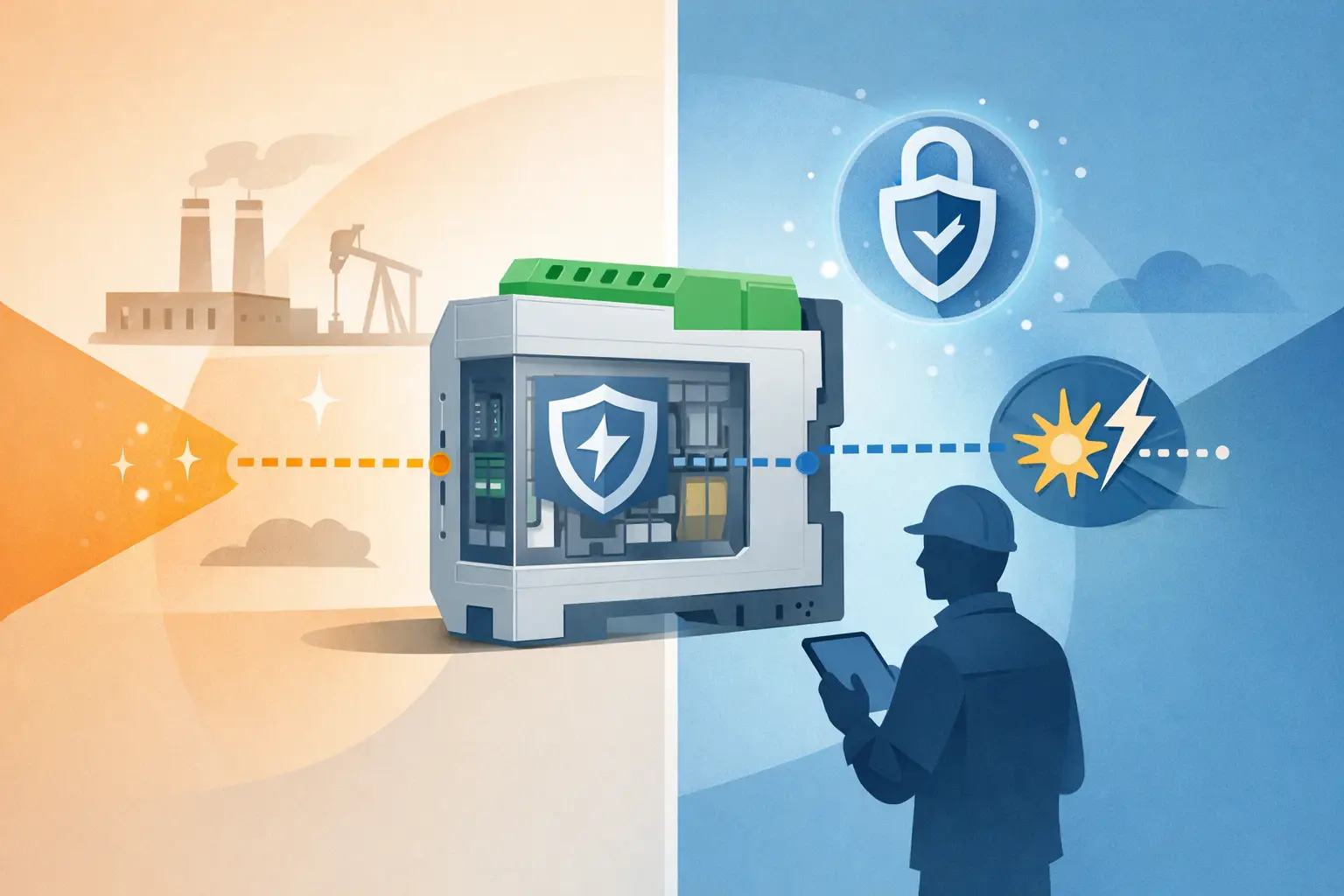
An intrinsically safe isolator is an interface device installed between safe-area control equipment and field devices located in a hazardous area. Its core job is to limit voltage and current so the electrical energy sent into the hazardous zone remains below the ignition threshold. At the same time, it provides galvanic isolation between circuits, which improves signal integrity, reduces ground loop problems, and helps protect connected systems.
This is not just a matter of signal conditioning. In many plants, the isolator is a certified protection boundary. It allows analog inputs, digital signals, HART communication, solenoid control, temperature measurement, and other process signals to pass between areas while maintaining compliance with hazardous-area protection requirements.
What is intrinsically safe isolator protection doing in a system?
In simple terms, the isolator makes sure that under normal operation, and under specified fault conditions, the circuit in the hazardous area cannot release enough electrical or thermal energy to cause ignition. That includes limiting open-circuit voltage, short-circuit current, and stored energy in inductive or capacitive parts of the loop.
The isolator also separates the hazardous-area field side from the control-system side. This separation matters because DCS, PLC, and marshalling circuits are often referenced differently from field instruments. Without proper isolation, noise, common-mode voltage, and earthing issues can affect signal accuracy or even damage sensitive I/O.
So, when engineers ask what an intrinsically safe isolator does, the correct answer has two parts. First, it enforces intrinsic safety parameters. Second, it maintains reliable signal transfer between the field and the control architecture.
How an intrinsically safe isolator works
The exact design depends on the application, but the operating principle is consistent. The module accepts an input from one side of the system, transfers that signal through an isolation barrier, and reproduces a controlled output on the other side while keeping the hazardous-area circuit energy-limited.
In galvanically isolated designs, the signal passes through transformers, optocouplers, or similar isolation elements rather than through a direct electrical connection. That is a major difference from traditional zener barriers, which rely heavily on a high-integrity earth connection to divert excess energy.
An intrinsically safe isolator may be used for 4-20 mA transmitters, NAMUR sensors, RTDs, thermocouples, valve positioners, switch contacts, and frequency or pulse signals. Many models also support HART transparency, which is critical when plants need both process measurement and digital device diagnostics on the same loop.
The internal electronics are designed and certified around defined entity parameters or system parameters. In practice, that means the isolator must be matched correctly with the field device, cable characteristics, gas group, temperature class, and installation method. Selection is engineering work, not just catalog matching.
Intrinsically safe isolator vs zener barrier
This comparison comes up in almost every hazardous-area project because both devices are used to protect field circuits, but they behave differently in service.
A zener barrier is usually simpler and can be cost-effective, but it depends on a dedicated, low-resistance earth connection. If that earthing is poor, degraded, or improperly maintained, the protection concept is compromised. Zener barriers can also introduce limitations related to signal reference and grounding.
An intrinsically safe isolator is typically preferred where signal quality, installation flexibility, and grounding independence are priorities. Because it provides galvanic isolation, it can reduce ground loop issues and simplify integration with modern PLC and DCS systems. For many facilities, especially where uptime and diagnostic access matter, that makes the isolator the better engineering choice.
The trade-off is that isolators are often more complex and may have a higher unit cost. But in critical installations, the additional performance, easier commissioning, and lower sensitivity to earthing problems often justify that choice.
Where intrinsically safe isolators are used
The most common use is in hazardous process plants where field instruments are installed in areas with flammable gas, vapor, or dust risk. Oil and gas terminals, petrochemical units, tank farms, offshore platforms, hydrogen systems, solvent handling lines, and chemical process skids are typical examples.
They are also used in less obvious applications. Food, pharmaceutical, and biomedical facilities may handle alcohols, solvents, fine powders, or cleaning environments that create classified zones. Marine and mining operations also use intrinsically safe interfaces where safety, certification, and operational continuity are tightly controlled.
In these environments, the isolator may sit in a control cabinet in the safe area or a suitably certified enclosure, connected to field transmitters, gas detectors, emergency shutdown inputs, or actuator interfaces. The module becomes part of the certified signal path, not just a convenience accessory.
What to check when selecting an intrinsically safe isolator
Choosing the right unit starts with the loop function. Is the circuit carrying an analog input, analog output, contact signal, pulse train, temperature input, or communication protocol such as HART? The isolator has to support the exact signal behavior required by the application.
Next comes hazardous-area compliance. ATEX and IECEx certification are common reference points, but the required marking depends on region, zone classification, gas group, and temperature class. The isolator must be suitable for the protection concept of the loop and compatible with the field device certification.
Electrical matching is equally important. Engineers need to verify supply requirements, voltage drop, loop resistance, entity parameters, cable capacitance and inductance, and whether line fault detection or bidirectional communication is required. A module that is certified but poorly matched to the instrument can still create commissioning problems or communication failures.
Functional safety may also matter. If the loop is part of a shutdown, burner management, gas detection, or other safety instrumented function, SIL capability and failure data become relevant. In those cases, the intrinsically safe isolator is not being selected only for Ex compliance, but also for its role in the broader safety lifecycle.
Why certification matters more than the brochure
In hazardous areas, performance claims are secondary to documented compliance. The isolator should have clear certification, installation parameters, and application documentation that engineering teams can use during design review, inspection, and maintenance.
This is where disciplined product selection matters. Certified isolation products from established manufacturers help reduce ambiguity during FAT, site acceptance, and later audits. They also make life easier for maintenance teams who need traceable data for replacement and loop verification.
A technically suitable device with poor documentation can slow down a project. A certified device with clear markings, defined parameters, and application support is usually the safer long-term decision.
Common mistakes when applying intrinsically safe isolators
One common mistake is treating all isolators as interchangeable. Similar-looking modules may support very different loop types, approvals, and output behaviors. Another is ignoring the total loop calculation, especially with long cable runs, low-power field devices, or HART communication.
Grounding assumptions also create problems. Some engineers move from zener barriers to isolated interfaces but do not fully review shield termination, reference potential, or cabinet design. The result may be a compliant loop with poor signal stability.
There is also a documentation issue. If the hazardous-area dossier does not clearly identify the installed isolator, field device parameters, and wiring method, future maintenance becomes harder than it should be. In regulated environments, that is more than an inconvenience.
What is intrinsically safe isolator value for plant reliability?
The value is not limited to explosion protection. A properly selected intrinsically safe isolator can improve measurement stability, reduce nuisance faults, support HART diagnostics, and simplify integration between hazardous-area instruments and modern control systems.
For procurement teams, that means fewer compatibility disputes and clearer certification records. For E&I engineers, it means cleaner interface design. For operations, it means safer loops with better uptime potential.
That is why companies such as Arya Automation position intrinsically safe isolation as part of certified control infrastructure, not as a minor accessory. In critical plants, the interface between the field and the control room is often where compliance, reliability, and maintainability either come together or break apart.
If you are evaluating a hazardous-area loop, the better question is not only what is an intrinsically safe isolator, but whether the selected device is correctly certified, correctly matched, and correctly documented for the service it will actually see.