


CTC Sensor Selection for Critical Machinery
A failed bearing rarely announces itself on schedule. In most plants, it shows up first as a small change in vibration, then a maintenance callout, then an unplanned stop if nobody catches it early enough. That is where a ctc sensor becomes relevant – not as a generic instrument, but as a frontline device for machinery health monitoring in production environments where uptime, safety, and repeatability matter.
For engineers and maintenance teams, the real question is not whether vibration should be measured. It is which sensor type, output, mounting method, and certification level fit the application without creating signal problems or false confidence. In critical industries, that distinction matters.
What a ctc sensor does in industrial service
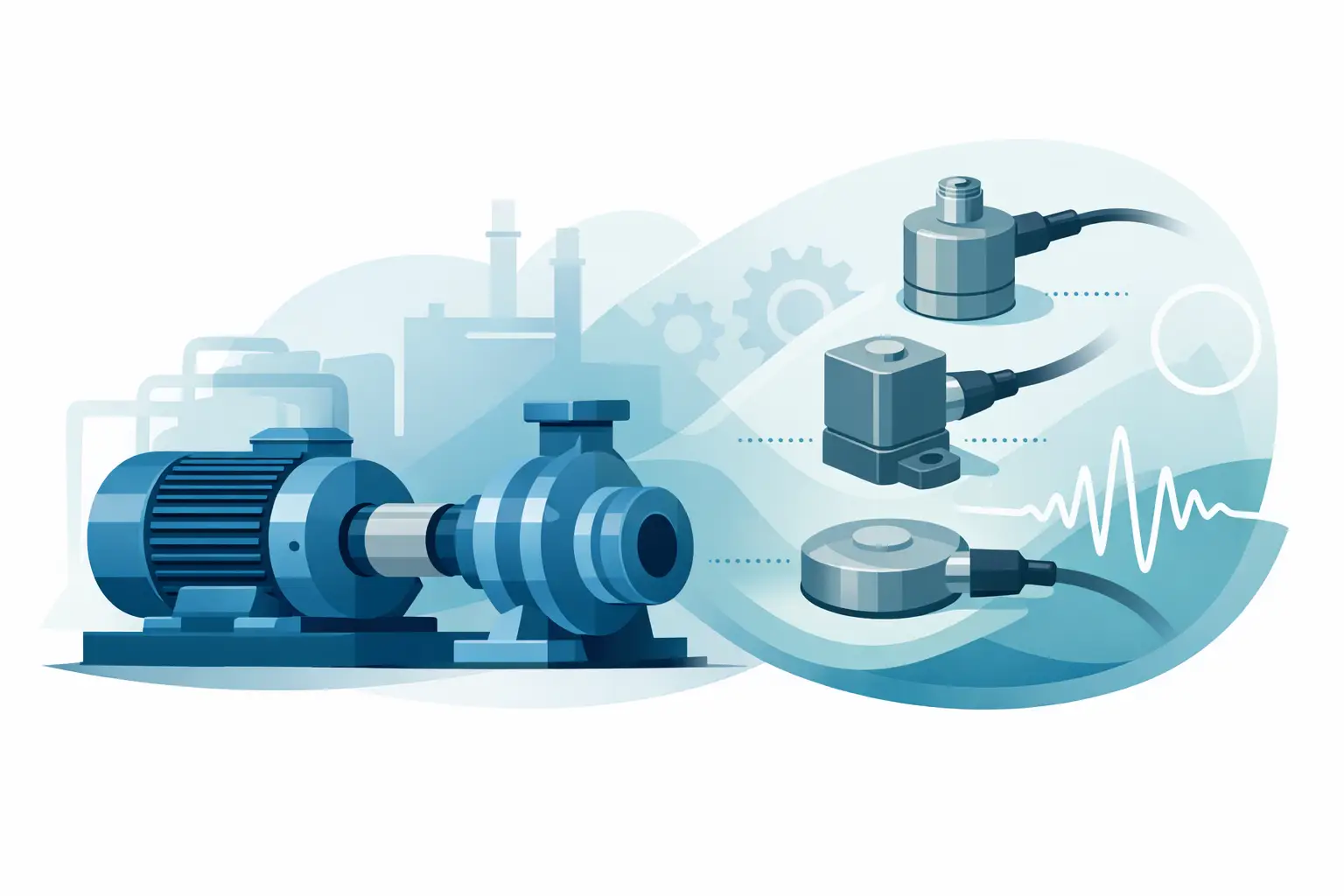
A ctc sensor is typically used to measure machine vibration so that rotating assets can be monitored for imbalance, misalignment, looseness, or bearing wear. In practical terms, these sensors are installed on motors, pumps, fans, compressors, gearboxes, and other rotating equipment where early fault detection supports planned maintenance instead of emergency intervention.
Most industrial vibration sensors in this category are accelerometers. They convert mechanical vibration into an electrical signal that can be trended, analyzed, or fed into a protection system. Depending on the application, the output may be a raw dynamic signal for detailed analysis or a conditioned signal such as 4-20 mA for direct integration into a PLC, DCS, or SCADA environment.
That distinction affects the whole monitoring strategy. A raw signal gives more diagnostic depth, but it usually requires dedicated analysis hardware and stronger attention to signal integrity. A 4-20 mA output is easier to integrate and scale across a plant, though it may not provide the same level of waveform detail for advanced fault analysis.
Where a ctc sensor fits best
Not every rotating asset needs the same level of monitoring. A ctc sensor is often a strong fit where machinery condition has direct implications for production continuity, maintenance cost, or process safety.
In oil and gas, that can mean pumps and compressors in hazardous areas where failure leads to immediate operational and safety concerns. In chemical processing, it may involve agitators, blowers, and transfer systems that run continuously under variable load. In food and beverage or biomedical production, the focus may be less about explosion risk and more about avoiding contamination events, batch loss, or costly downtime.
There is also a difference between route-based and continuous monitoring. If technicians collect vibration data periodically with handheld devices, the installed sensor may support temporary or semi-permanent measurement points. If the machine is too critical to leave unobserved, continuous monitoring with permanent sensors and fixed signal infrastructure is the better approach.
How to choose the right ctc sensor
Selection usually starts with the machine, not the catalog. Speed range, fault modes, mounting location, ambient conditions, cable routing, and control system compatibility all matter.
Output type and control system compatibility
The first practical decision is often output type. If the plant wants direct connection into an automation system for alarming and trending, a 4-20 mA vibration transmitter can be the simplest option. It reduces the need for separate signal conditioning and is easier for operators and maintenance teams to work with inside existing control architecture.
If the objective is deeper condition analysis, a dynamic acceleration output is often preferred. This supports spectral analysis and a more detailed view of machine behavior. The trade-off is that the installation becomes more dependent on proper cabling, analyzer compatibility, and noise control.
For many facilities, the answer is not either-or. Critical assets may justify dynamic monitoring, while secondary assets use 4-20 mA transmitters for plant-wide visibility.
Measurement range and frequency response
A sensor that is too broad can reduce useful sensitivity. A sensor that is too narrow can miss the fault signature you actually need. Bearing defects, cavitation, misalignment, and structural resonance do not all present the same way, so the required frequency response should align with the machinery and the failure mode of concern.
This is where application knowledge matters more than specification-sheet comparison. A cooling fan, high-speed motor, and reciprocating machine may all be labeled as vibration applications, but their monitoring requirements are not interchangeable.
Mounting method
Mounting quality directly affects measurement quality. Stud mounting generally provides the most reliable signal path and repeatable readings. Adhesive mounting can be acceptable in some cases, but it is more sensitive to surface preparation and long-term stability. Magnetic mounts are useful for temporary measurements, not for permanent critical monitoring.
Poor mounting can create misleading data, especially on high-frequency measurements. In practice, a premium sensor installed badly will often perform worse than a standard sensor installed correctly.
Environmental and area classification requirements
In hazardous-area applications, sensor selection must extend beyond measurement performance. If the installation point falls within a classified zone, the sensor and associated barriers or isolators must align with the required protection concept and certification framework.
ATEX and IECEx compliance are not paperwork exercises. They determine whether the installed solution is suitable for operation where explosive gas or dust atmospheres may be present. The same applies to enclosure integrity, cable glands, and interface devices. A sensor cannot be treated in isolation from the rest of the loop.
Installation details that affect performance
Vibration monitoring systems often underperform because of installation details that seemed minor at the time. Cable routing is one of the most common examples. Running sensor cables alongside high-power lines can introduce electrical noise that compromises signal quality, particularly with low-level dynamic outputs.
Grounding and shielding also need attention. One plant may have no issue with a certain layout, while another sees intermittent noise because of variable frequency drives, poor grounding discipline, or long cable runs. That is why best practice should always be applied at installation rather than after a commissioning problem appears.
Sensor orientation matters too. If a machine is expected to show fault signatures primarily in the horizontal direction, mounting the sensor vertically may reduce the usefulness of the data. Some assets justify multi-axis monitoring, while others can be monitored effectively with a single well-placed point. It depends on machine construction and the failure modes you are trying to detect.
CTC sensor data is only useful if alarm strategy is correct
A sensor does not protect a machine by itself. It provides information, and that information must be interpreted correctly. One common mistake is setting alarm thresholds too low and creating nuisance alarms that operators eventually ignore. The opposite problem is setting them too high and missing the early warning period that justified the installation in the first place.
Baseline measurement is essential. Before alarm levels are finalized, the machine should be observed in healthy operating conditions across expected load ranges. That gives the maintenance and reliability team a realistic reference point instead of a guessed threshold.
Trend-based monitoring is often more valuable than reacting to a single number. A steady increase in vibration over time may indicate a developing issue even if the machine has not crossed a formal alarm limit yet. For that reason, integration into plant monitoring platforms should support both alarm management and historical analysis.
Certification and reliability are part of sensor value
For high-risk sectors, the value of a ctc sensor is not limited to the sensing element. Reliability of construction, consistency of output, environmental rating, and compatibility with certified interface equipment all affect lifecycle performance.
This is especially relevant in facilities where vibration monitoring ties into broader process safety, maintenance planning, or hazardous-area compliance. A lower-cost sensor may seem attractive at procurement stage, but if it introduces uncertainty, frequent replacement, or integration issues, the total cost rises quickly.
Engineering teams should also consider the support structure behind the product. Availability of technical documentation, mounting accessories, cable options, hazardous-area guidance, and application support all influence whether the system performs as intended after installation.
Companies such as Arya Automation typically address this by combining sensor supply with application-specific engineering support, which is often what separates a functioning installation from a box-checking exercise.
When a ctc sensor is the right investment
If the asset is critical, failure-prone, difficult to access, or located in a hazardous or regulated environment, a ctc sensor is rarely an optional extra. It is part of a disciplined reliability strategy. The exact configuration may vary – dynamic output for diagnostics, 4-20 mA for control integration, hazardous-area certified installation for classified zones – but the purpose stays the same: detect machine degradation before it becomes downtime, damage, or safety exposure.
The strongest results usually come from treating vibration sensing as part of a wider control and protection architecture, not as a standalone device purchase. When sensor selection, certified interfaces, installation practice, and alarm logic are all aligned, the data becomes actionable. That is when condition monitoring starts paying for itself long before a machine reaches failure.
A good sensor does more than measure motion. In the right application, it gives the plant time to make the next decision under control rather than under pressure.