


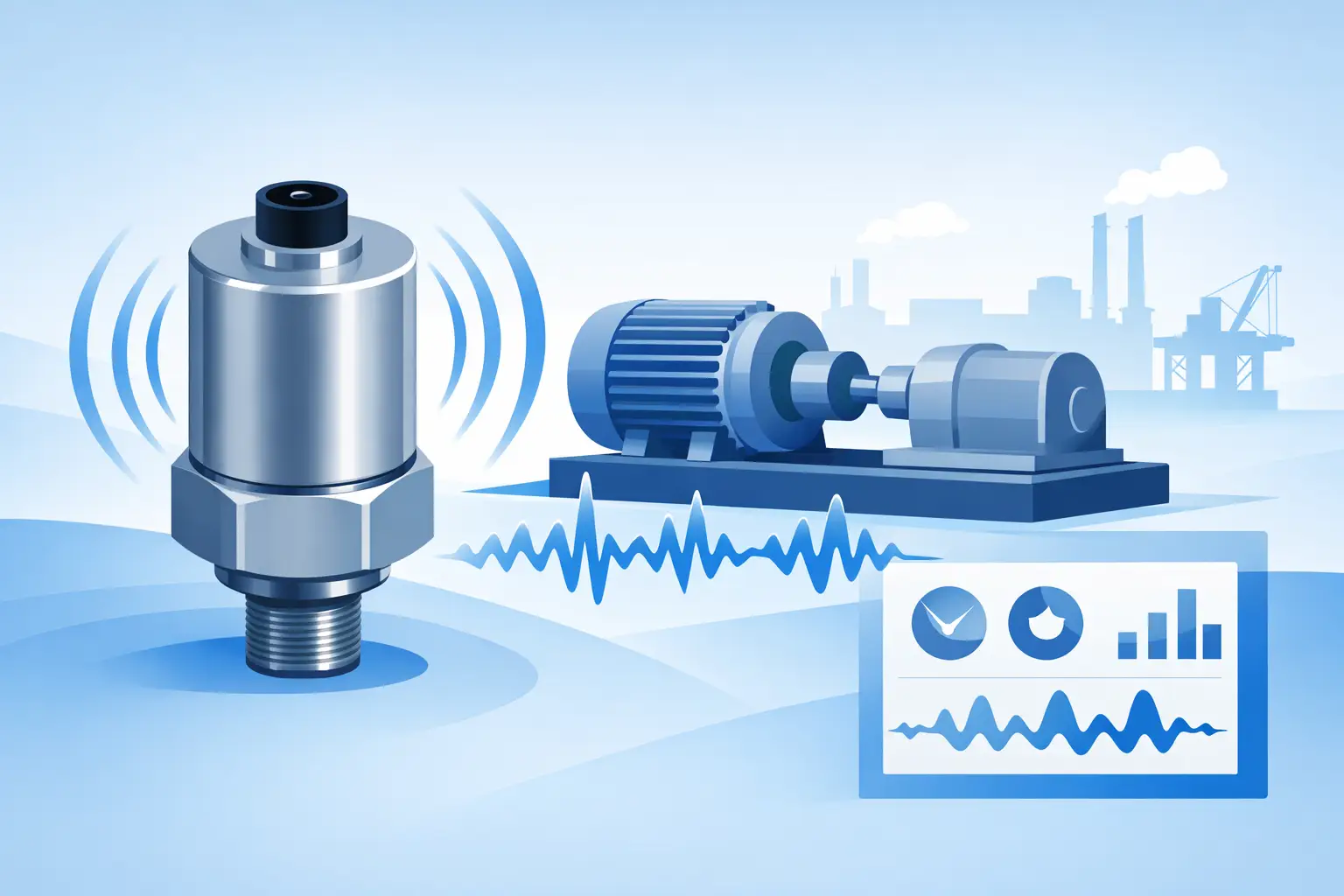
HS-429 Hansford Sensor for Vibration Duty
When a pump, fan, or motor starts showing higher vibration, the problem is rarely the reading itself. The real issue is whether the instrument installed at the machine can be trusted in that environment, on that mounting surface, and within that maintenance strategy. That is where the hs-429 hansford sensor becomes relevant. For plants that depend on accurate vibration data to protect rotating equipment, sensor selection is not a minor detail. It is part of the protection philosophy.
Where the hs-429 hansford sensor fits
The HS-429 from Hansford Sensors is part of a vibration monitoring approach built around continuous machine condition assessment. In practical terms, this type of sensor is used where maintenance and reliability teams need dependable vibration feedback from assets such as motors, pumps, compressors, blowers, and gearboxes. The goal is straightforward: detect mechanical deterioration early enough to plan corrective action before it turns into forced downtime or secondary damage.
In industrial settings, vibration sensors are not chosen in isolation. They sit inside a wider system that may include local transmitters, PLC or DCS input cards, protection relays, SCADA integration, and in some cases hazardous-area barriers or isolators. Because of that, the right question is not simply whether a sensor can measure vibration. The better question is whether it can do so accurately, repeatedly, and safely within the actual conditions of the plant.
For reliability engineers, that means looking at mounting method, output type, environmental resistance, cable routing, operating temperature, and area classification. For procurement teams, it means comparing not only price, but lifecycle suitability. A lower-cost sensor that fails early, drifts, or creates signal integrity issues is usually the more expensive choice once labor and downtime are included.
Why sensor specification matters more than the datasheet headline
The hs-429 hansford sensor will usually be considered by buyers who already understand that vibration monitoring is only as good as the measurement chain. A sensor may look suitable based on one specification line, but poor alignment between the sensor and the application can compromise the value of the entire monitoring system.
Sensitivity is one example. If the sensor output does not match the expected vibration profile of the machine, the result may be weak trending, excessive noise, or readings that are harder to interpret at the control system level. Frequency response is another. A machine with bearing-related issues may require different attention than one where imbalance, misalignment, or looseness is the main concern.
The machine itself also shapes the decision. A large slow-speed fan and a compact high-speed motor do not behave the same way, and they should not always be monitored the same way. The same applies to mounting points. A sensor mounted on a rigid bearing housing will generally produce more useful data than one mounted on a less stable surface, even if both installations use the same device.
HS-429 Hansford sensor in real plant conditions
In a clean laboratory setting, many sensors can perform adequately. Industrial production environments are different. Moisture, washdown, dust, oil mist, thermal cycling, cable stress, and electromagnetic interference all affect long-term performance. That is why vibration monitoring components should be judged by field suitability as much as by nominal measurement capability.
For plants in oil and gas, petrochemical, chemical processing, marine, mining, and energy applications, environmental resilience is often as important as signal quality. If a sensor is being installed near process equipment, on outdoor skids, or in areas with demanding ambient conditions, enclosure integrity and build quality become critical. If the installation is near classified zones, then certification and system architecture cannot be treated as afterthoughts.
This is one reason Hansford Sensors products are often evaluated within disciplined engineering frameworks. Buyers in safety-driven industries want repeatable performance, clear technical documentation, and confidence that the device will integrate cleanly into broader monitoring and protection infrastructure.
What to check before specifying the hs-429 hansford sensor
The first consideration is the monitoring objective. Some plants want simple condition trending for maintenance planning. Others need alarm-based machine protection tied into shutdown logic or operator indication. Those two use cases can look similar at first, but they place different demands on the sensor output, response characteristics, and interface requirements.
The second consideration is the electrical interface. Engineers need to confirm compatibility with existing monitoring hardware, whether that means a dedicated vibration monitor, a PLC analog input, a control room display, or a signal conditioning layer. If the project includes hazardous-area installation, barriers, isolators, or intrinsically safe interfaces may need to be part of the design from the beginning rather than added later.
The third consideration is mechanical installation. Thread type, mounting orientation, cable arrangement, and accessibility for maintenance all affect performance. A high-quality sensor can still produce poor results if it is mounted through an unsuitable adapter, installed on painted or uneven surfaces, or routed with cable practices that invite noise or physical damage.
Temperature and ingress protection should also be checked carefully. Plants often underestimate how quickly environmental stress shortens instrument life. Steam cleaning, coastal exposure, vibration fatigue on the cable, and repeated heat cycling can all turn a nominally correct specification into a maintenance burden if the installation details are weak.
Integration with maintenance and reliability programs
The best use of a vibration sensor is not just fault detection. It is trend quality over time. That is what allows maintenance teams to distinguish between normal operating variation and developing mechanical problems. A useful sensor contributes stable, believable data that can support route-based analysis, continuous monitoring, or alarm management depending on the criticality of the asset.
For critical equipment, online monitoring is often justified because the cost of failure is too high. In that context, the sensor becomes part of uptime protection. For balance-of-plant equipment, the same sensor may be used to support predictive maintenance and reduce unnecessary inspections. The difference is not the value of the data. It is how quickly action needs to follow the data.
This is also where engineering support matters. A technically correct product still needs correct placement, proper commissioning, and sensible alarm strategy. If thresholds are set too low, operators stop trusting alarms. If they are set too high, useful warning time is lost. Good vibration monitoring is not only about hardware. It is about disciplined implementation.
Certification, compliance, and high-risk environments
In regulated industries, instrumentation decisions are influenced by more than performance. Compliance requirements often shape what can be installed, where it can be installed, and how signals are transmitted back to safe-area systems. If the hs-429 hansford sensor is being considered for hazardous-area service, the complete loop should be reviewed against the applicable certification and protection concept.
That includes the sensor, associated interface devices, cable practices, and the final control or monitoring equipment. ATEX and IECEx considerations are especially relevant in facilities where gas, vapor, or combustible dust may be present. A technically suitable vibration sensor is not enough if the installation does not satisfy the site classification and documentation requirements.
For this reason, many end users prefer working with suppliers that understand both the product and the application environment. Arya Automation operates in exactly that space, where certified instrumentation, hazardous-area compatibility, and practical system integration need to align.
When the HS-429 is a strong choice, and when more review is needed
The HS-429 Hansford sensor is a strong candidate when the plant needs dependable vibration measurement from rotating assets and the specification aligns with the machine duty, environmental conditions, and control architecture. It is particularly relevant where maintenance teams value continuous equipment health insight and want a device from a recognized vibration monitoring manufacturer.
That said, no single sensor is automatically the right answer for every asset. If the machine is extremely high speed, exposed to unusual thermal conditions, located in a classified area with strict loop limitations, or tied into a complex protection system, then a deeper application review is warranted. In some cases, the main question is not whether the sensor can measure vibration, but whether another output type, mounting arrangement, or complete monitoring assembly would perform better over the long term.
The practical approach is to specify the sensor around the machine, not force the machine to fit the sensor. That usually leads to better data, fewer nuisance issues, and stronger confidence from both operations and maintenance teams.
A vibration sensor earns its place when it keeps giving reliable information long after commissioning day. If the hs-429 hansford sensor matches the equipment, environment, and compliance requirements, it can become a quiet but essential part of keeping critical assets running safely.