


SIL3 HART Isolator: What It Solves
A bad analog loop in a safety function rarely announces itself with a dramatic failure. More often, it shows up as nuisance trips, unstable readings, lost HART communication, or a maintenance team trying to troubleshoot a signal path that crosses hazardous and safe areas with too many unknowns. In that kind of environment, a SIL3 HART isolator is not a convenience item. It is a defined protection and signal interface component that can directly affect safety integrity, diagnostic access, and long-term plant reliability.
Where a SIL3 HART isolator fits
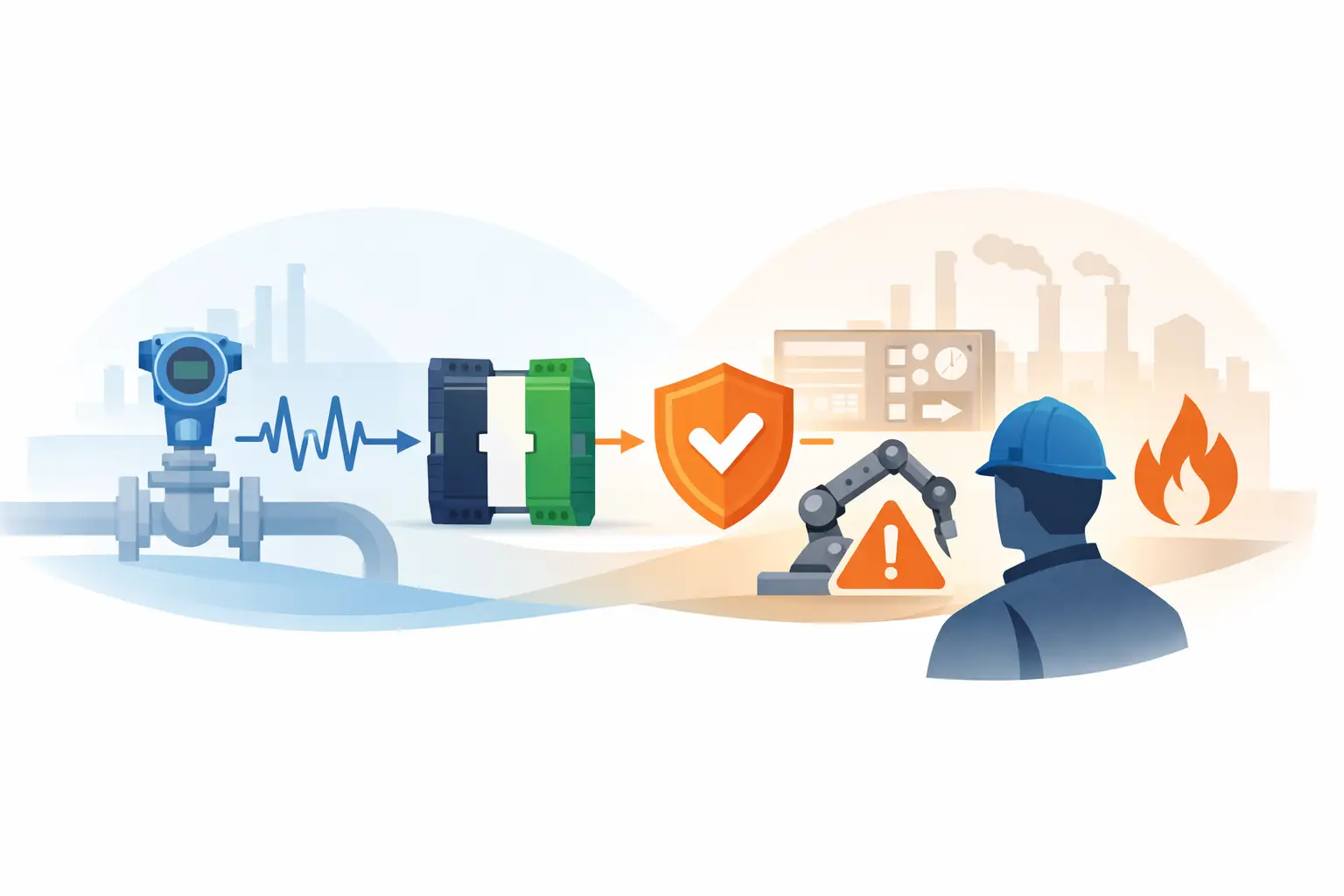
A SIL3 HART isolator is typically used in process plants where a 4-20 mA signal with HART communication must pass between field devices and control or safety systems while maintaining galvanic isolation and supporting functional safety requirements. That usually means the isolator sits between a transmitter, positioner, or other HART-enabled device in the field and the receiving side in the control room, marshalling cabinet, or safety logic solver.
The value is not just electrical separation. In a safety-related loop, the isolator helps preserve signal quality, reduce ground loop problems, separate fault domains, and maintain communication access for configuration and diagnostics. When the isolator is designed and certified for SIL3 applications, it can be considered as part of a safety instrumented function where the required integrity level demands proven, documented performance.
This matters most in sectors where process deviation carries real consequences – oil and gas, chemical processing, hydrogen, marine, energy, and other operations where shutdown systems, burner management, pressure protection, and critical monitoring loops must keep working under fault conditions.
Why standard isolation is not enough
A conventional signal isolator may solve noise or grounding issues, but that does not automatically make it suitable for a SIL-rated application. The difference is in the certification basis, the failure data, the hardware fault tolerance assumptions, and the documented constraints for use.
In practice, engineers are often balancing three requirements at once. First, the loop must transmit the analog process value accurately. Second, HART pass-through must remain available for asset management and device diagnostics. Third, the interface hardware must align with the safety case for the instrumented function. If any one of those is overlooked, the result is usually extra engineering work later – or worse, a compliance gap discovered during validation.
A SIL3 HART isolator is selected because it addresses these requirements together, not because SIL3 is the highest number on a datasheet. In some loops, SIL2 is fully appropriate. In others, the overall architecture, proof test coverage, and risk reduction target push the design toward SIL3-capable components. The correct choice depends on the safety requirement specification, not on a preference for overdesign.
What engineers should verify in a SIL3 HART isolator
The first checkpoint is the actual certification path. Engineers should confirm whether the device is certified for use in SIL3 systems, under what standards it has been assessed, and whether the certification supports the intended architecture. A product may be suitable for a SIL3 safety function in one configuration and not in another. That distinction is not a minor detail.
The second checkpoint is HART transparency. Some isolators claim HART compatibility but only support limited communication quality or specific operating conditions. In the field, that can mean intermittent access to diagnostics, failed device polling, or reduced reliability during commissioning. If the plant depends on remote configuration, device verification, or predictive maintenance workflows, full HART pass-through is not optional.
The third checkpoint is isolation performance itself. This includes galvanic separation between input, output, and supply, along with immunity to common industrial electrical noise. Plants with long cable runs, mixed grounding practices, VFD-heavy environments, or shared panel infrastructure will see the difference between nominal isolation and well-engineered isolation quickly.
Then there is hazardous-area compliance. Many applications requiring a SIL3 HART isolator also involve ATEX or IECEx requirements, intrinsically safe loops, or interfaces between safe and hazardous zones. The isolator must fit the area classification strategy of the project. Functional safety certification and hazardous-area certification are related, but they are not interchangeable.
Temperature range, mounting density, power consumption, and maintenance accessibility also deserve attention. In compact cabinets, thermal load and spacing are not abstract concerns. A device that performs well on paper but creates service challenges in the panel can still become a weak point over time.
SIL3 HART isolator applications in real plants
One common application is pressure or level measurement feeding a safety instrumented system while still requiring HART access for calibration checks and diagnostics. The analog value drives the safety action, but maintenance teams also need visibility into device status, sensor drift, and configuration. The isolator makes that possible while preserving electrical separation and supporting the loop’s safety requirements.
Another common use case is valve position feedback or control signal interfacing where HART-enabled devices are part of a shutdown or process protection function. In these loops, communication quality matters because partial stroke testing, device health reporting, and setup verification may depend on HART access. Signal isolation reduces the risk of electrical interference corrupting either the analog signal or the communication path.
Tank farms, gas handling skids, chemical dosing systems, and burner management packages also frequently benefit from this architecture. These systems often combine long field wiring, hazardous-area constraints, and strict uptime expectations. A properly selected isolator can simplify loop design and reduce troubleshooting time across the operating life of the installation.
The trade-offs that matter
There is no value in pretending every project needs the same isolator specification. Higher-integrity devices usually come with more documentation requirements, tighter installation constraints, and a higher purchase cost than general-purpose isolation modules. For procurement teams, that can invite pressure to standardize on a lower-cost part.
But the cheaper choice can become expensive if it creates validation delays, compromises HART diagnostics, or forces redesign when the safety assessment is finalized. On the other hand, specifying a SIL3 HART isolator for every analog loop in a non-safety application may add unnecessary cost and complexity. The right approach is disciplined selection based on loop criticality, certification needs, and lifecycle maintenance requirements.
It also depends on how the plant manages proof testing and functional safety documentation. If the site has a mature SIS program, engineers will likely review PFD data, failure modes, and mission time assumptions carefully. If those processes are weaker, selecting clearly certified, application-appropriate devices becomes even more important because the margin for interpretation is smaller.
Integration and commissioning considerations
Even the best isolator cannot compensate for poor loop design. During integration, engineers should verify loop resistance, power budget, HART communication compatibility with connected devices, grounding practices, and cabinet segregation. A SIL3 HART isolator must be treated as part of a system, not as a standalone fix.
Commissioning should include both analog signal verification and HART communication checks under real operating conditions. It is not enough to confirm that the 4-20 mA signal is present. Teams should also confirm that communicators, asset management platforms, or control system interfaces can reliably read device variables and diagnostics through the isolator. Problems often appear only after the cabinet is energized alongside other equipment.
Documentation matters just as much. Safety manuals, installation constraints, proof test recommendations, and hazardous-area parameters should be available to the engineering and maintenance teams who will own the loop after startup. This is where an experienced technical partner adds value. Suppliers such as Arya Automation are most useful when they help align the product choice with the actual application, certifications, and lifecycle expectations rather than simply quoting a part number.
Choosing with the full lifecycle in mind
The strongest case for a SIL3 HART isolator is not that it adds another certified device to the panel. It is that it helps create a signal path that remains safe, diagnosable, and manageable throughout the life of the plant. That includes startup, proof testing, maintenance shutdowns, instrument replacement, and audits.
When engineers choose one, they should ask straightforward questions. Does it support the required safety integrity level in the intended architecture? Does it preserve HART communication without compromise? Does it fit the hazardous-area concept? Will it remain serviceable in the real panel environment, with the real field devices, and under the plant’s actual maintenance practices?
If those answers are clear, the isolator stops being a commodity. It becomes part of a deliberate safety and reliability strategy – exactly where critical process infrastructure should be built.